No-Dig Gardening: How to build fertile soil without breaking ground
No-dig gardening is a practical, low-cost way to produce food while improving soil health over time. Popularized by growers like Charles Dowding, the method avoids traditional tilling and instead builds fertility from the top down.
At its core, no-dig gardening works with natural soil biology rather than disrupting it. By leaving the soil undisturbed and layering organic matter on top, growers can improve structure, retain moisture, suppress weeds, and increase yields with fewer inputs.
What “no-dig” actually means
Traditional gardening often relies on turning or tilling soil to prepare beds. While this can create a temporarily loose soil structure, it can also break up fungal networks, accelerate moisture loss, and bring dormant weed seeds to the surface.
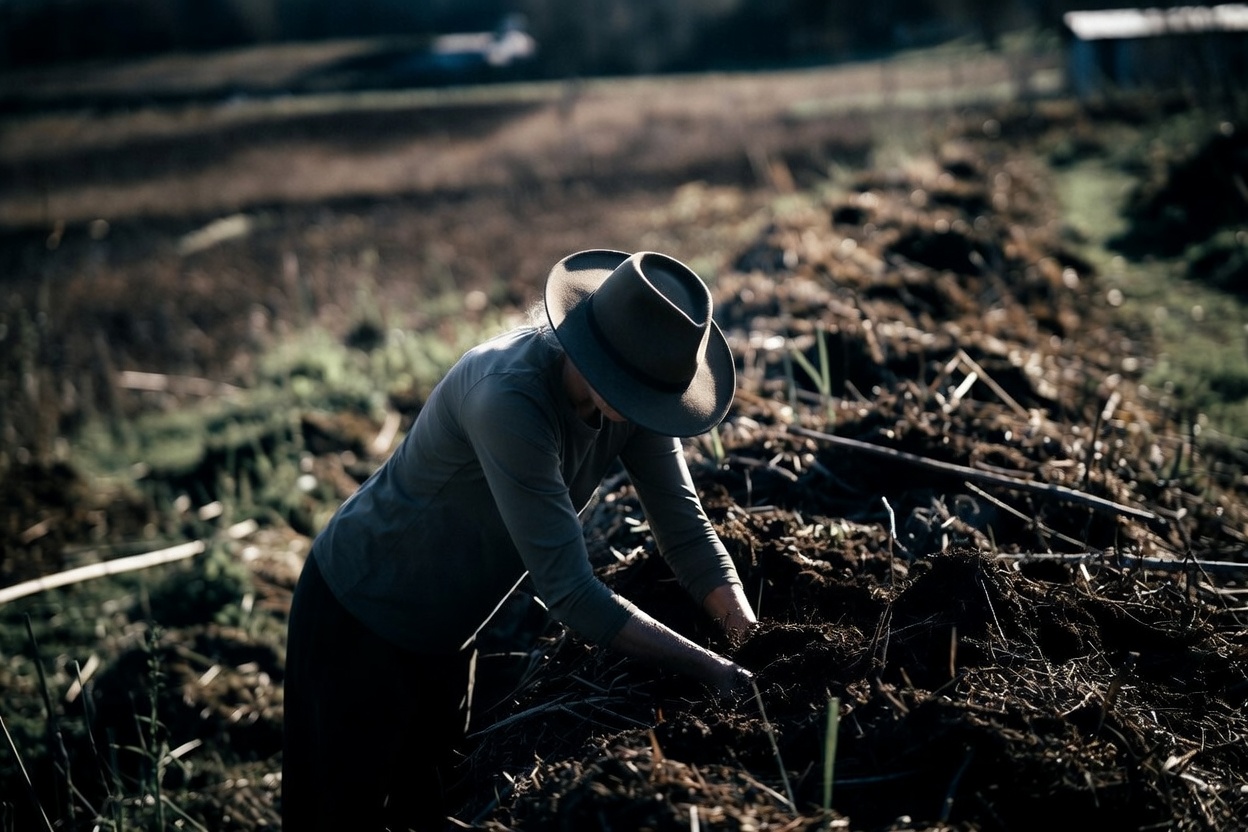
No-dig gardening takes the opposite approach. The soil remains undisturbed, and fertility is built through surface applications of compost and organic materials. Over time, worms and microbes incorporate these materials naturally, creating a stable, nutrient-rich growing environment.
In a recent Door to Freedom symposium, Beverly Johansson shared her experience with no-dig gardening. Bear in mind, this is not your typical farmer. In fact, Beverly didn’t even start growing vegetables until she was 60 years old. Before that, she says she could barely keep a house plant alive!
Now, she and her husband run a small farm just north of Stockholm, Sweden, where they grow crops and raise chickens. In just a few short years, they have become self-sufficient in fruit, vegetables, and eggs.
Watch Beverly’s presentation below and visit her website here: https://nodigsweden.wixsite.com/english
Three benefits of the no-dig method (from Beverly’s website)
- Soil is undisturbed so its organisms can work and multiply.
Most soil already has structure for roots to grow and nutrients to feed plants, and it is full of growth-enabling organisms. Billions of fungal threads, nematodes and earthworms – to name but a few – are being helpful right under our feet. We need to help them to help us. You have already started no dig without knowing! Since the last time you dug, tilled or forked your soil, it has been healing itself, with networks of fungi and the recreation of a stable structure. With no dig you simply and literally build on that. - Organisms are fed with organic matter on the surface, as in nature but faster.
Allow soil to work its magic. Nutrients become available when needed by plants. Roots ask fungi for food and moisture, and fungi work best when undisturbed, which is why you see stronger growth in no dig soil. Focus on feeding the soil rather than the plant. - Plant feeding is about biology (such as fungi) more than chemistry (nutrients/minerals).
No dig increases the ability of plants to find food. Compost mulches serve as a rapid source of food for soil organisms and enhance their activity, thus improving soil structure. In damp climates, compost is best for mulching as it is no suitable habitat for slugs.
How to start a no-dig garden
1. Choose and prepare your site
Select an area with adequate sunlight (6–8 hours per day for most crops). You do not need to remove existing grass or weeds. Instead, cut vegetation as low as possible and leave it in place.
2. Suppress existing growth
Cover the area with a layer of plain cardboard (remove tape and staples) or several sheets of newspaper. This blocks light to kill grass and weeds, which will decompose over time.
3. Add compost on top
Apply a layer of compost 4–6 inches thick directly over the cardboard. This becomes your initial growing medium. If compost is limited, a thinner layer can work, but weed suppression may be less effective in the first season.
4. Plant directly into the compost
Seeds and transplants can be planted immediately into the compost layer. Roots will grow down through the cardboard as it breaks down.
5. Mulch and maintain
Add organic mulch (straw, leaves, or wood chips) around plants to retain moisture and further suppress weeds. Each season, top up beds with additional compost.