10 things the meat industry doesn’t want you to know
Save Our Food and Farms has been investigating why independent farms keep disappearing while consumers pay more than ever for food. Again and again, the evidence points to the same conclusion: this isn’t actually a farming problem. It’s a problem of over-regulation of the small players and under-regulation of the big guys.
A bill in New Hampshire that would have benefited both farmers and consumers, which was passed by the legislature but then vetoed by the governor on July 16, became a flashpoint —because it is a first-in-the-nation challenge to one small part of that system. It sought to allow farmers and producers to process a small number of cattle, swine, sheep or goats at non-USDA certified facilities for direct in-state sale.
Whether or not you live in New Hampshire, here’s what the debate reveals about who really controls your food.
- You can raise an animal yourself and still not be able to sell the meat.
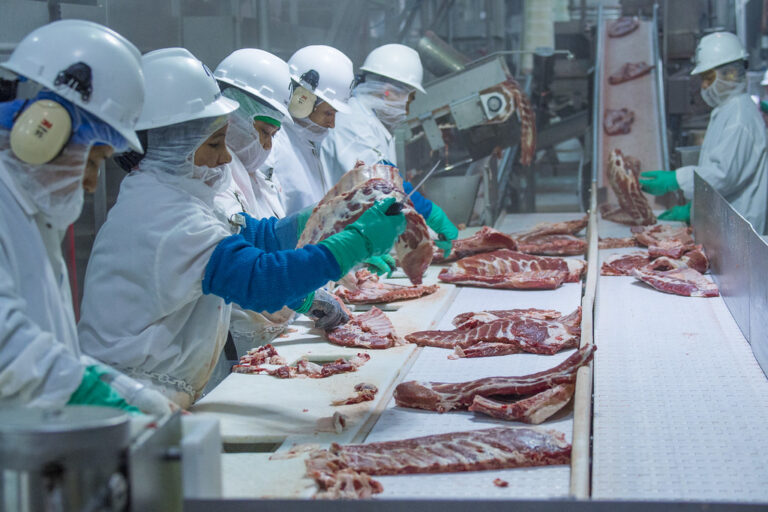
With very few exceptions, every livestock animal in the US must be slaughtered in a USDA-inspected facility, or its meat may not legally be sold. Farmers who butcher their own animals may only consume the meat or give it away. They may not sell it or barter for it. Some states allow ownership shares in a live animal, permitting the owners to butcher the meat for their own consumption without USDA inspection. Over 98% of beef cows are slaughtered in USDA-inspected plants. But there aren’t enough of them. - The real shortage in the meat supply isn’t from ranching. It’s lack of processing.
The 1967 Wholesome Meat Act essentially transferred state control over meat to the USDA. This led to the closure of most small American slaughterhouses and butcher shops in the USA, gradually ushering in huge meat processing monopolies and higher consumer prices for meat, while devastating ranchers. Roughly 27 states retain their own inspection systems, in addition to USDA-inspected facilities, but only if USDA determines those programs are at least as rigorous as the federal system. Today, 98% of cattle are processed in USDA-inspected facilities. But there aren’t enough of them. Many farmers must reserve slots 1-2 years in advance, but small producers can still be “bumped” and lose their place in line. - Federal rules helped push small processors out.
Small slaughterhouses and butcher shops have largely disappeared. New Hampshire illustrates the problem: only four USDA-inspected slaughterhouses. The argument behind HB 396 is that a regulatory system built around federal inspection has made it increasingly difficult for small local ranchers to survive. - Just four companies have come to dominate 85% of U.S. meat processing.
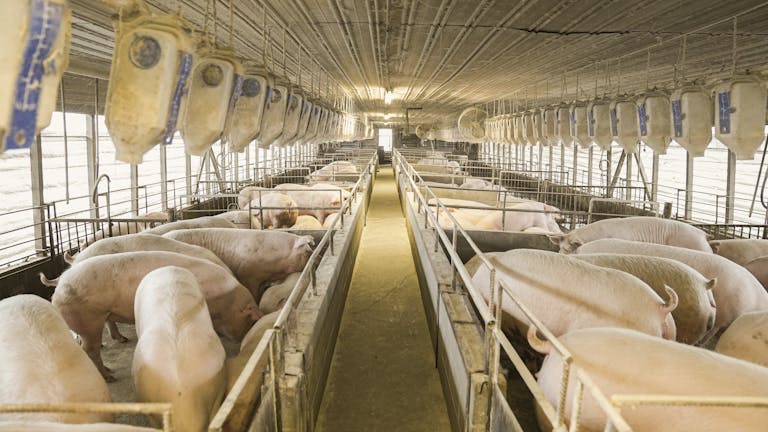
Meatpacking consolidation has given a handful of companies extraordinary control over meat production, processing and pricing. High margins and consolidation enabled large companies to acquire competitors and grow even larger. JBS, for example, became the largest beef processor not just in the United States but in the world, even though its two Brazilian owners have spent time in jail for bribery and other crimes. - Consolidation hurts both ranchers and consumers.
Meatpacking companies sit between ranchers and retailers and exert significant influence over both the prices paid to producers and the prices charged further down the supply chain. When processing, distribution, and retail become more concentrated, a larger share of the final food dollar can be captured after the farm gate rather than by the farmer who raised the animal. - Imported meat has come to comprise 16-18% of US consumption.
As domestic processing has consolidated, importing meat from overseas was cheaper than buying from American ranchers. Yet foreign-raised animals are not necessarily produced under the same legal requirements imposed on U.S. farmers. The result is an extraordinary contradiction: American ranchers face an increasingly restrictive and expensive system for bringing their own animals to market while retailers and processors can source substantial quantities of meat from abroad, with no requirement to label its origin. A system supposedly designed to protect American consumers ended up putting both American farmers and consumers at a disadvantage. - Bigger doesn’t necessarily mean better.
There is no evidence that USDA-inspected meat is healthier than meat slaughtered where animals are raised. When meat is processed far from home, consumers know very little about where it came from or how it was handled. One of the arguments for local processing is that it restores provenance and traceability. - Consolidation has made the entire system more fragile.
As small slaughterhouses and butcher shops disappeared, farmers became increasingly dependent on a limited number of large processing facilities. That dependence shows up in long waiting lists, longer transport distances, greater costs, and fewer choices about where animals can be processed. Small grocery stores have also struggled to compete as food distribution and processing have become more concentrated. - One state is trying to let farmers bypass the processing bottleneck.
HB 396 would allow New Hampshire farmers to process a limited number of animals outside the USDA-inspected system and sell the meat direct-to-consumer. This would increase local meat availability, encourage farmers to expand their herds, improve farm profitability, lower costs for farmers and customers, and provide clear information about where the meat comes from. The bill also challenges the assumption that USDA inspection is the only acceptable route to safe meat. Although the governor has vetoed it once, advocates, including Save Our Food and Farms, will continue to push to have it passed. - The fight over HB 396 is really a fight over who gets to control local food.
Supporters see the bill as a challenge to both federal control and the power of concentrated meatpacking companies. Their constitutional argument rests on the Tenth Amendment and the traditional authority of states over food, agriculture, and intrastate commerce. In that framing, HB 396 is not merely about slaughterhouses. It is about whether farmers and consumers can create local food systems outside a captured federal bureaucracy and highly concentrated meat processing cartel.