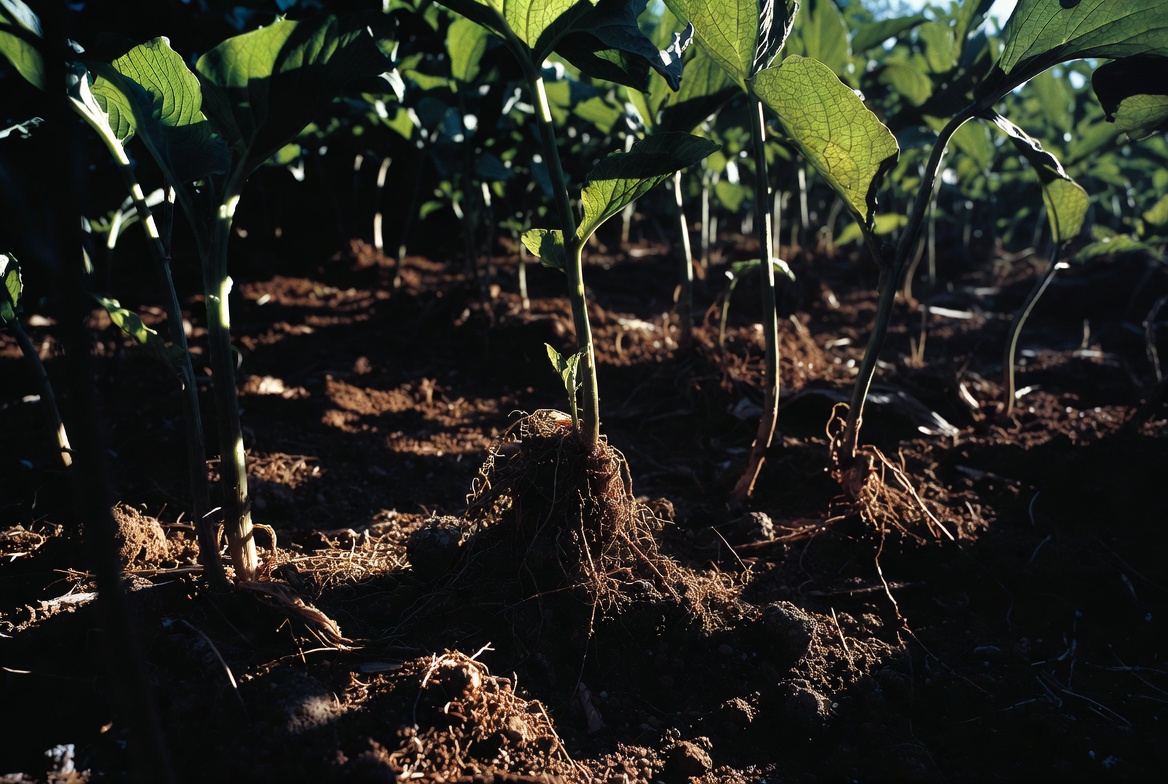
Learning to speak the language of plants and weeds
We’ve been taught to treat soil like a problem to be solved — test it, amend it, fix it, optimize it. But in his talk at the 2023 Door to Freedom ‘Attack on Food’ symposium, farmer Mark Fulford explains that soil is a living system, which is already speaking to us and telling us what it needs. The problem is that most of us just don’t know how to listen or decode the language.
Here’s the full talk, but read on for a brief summary:
As Fulford says, a soil test is supposed to be the basic starting point for a new gardener. But in actual fact that’s already a kind of abstraction; it’s just a sheet of paper standing in for something far more complex.
“Plants and animals don’t read our books. They don’t go to our schools. They don’t have any concept of what people are all about,” says Fulford. “But if we make them comfortable on their terms, things work out pretty good. So a soil test, for example, is like a snapshot that the chemistry world has given us… a so-called tool, but it was designed to satisfy and please fertilizer and pesticide dealers and corporations.”
Plants respond to conditions. And if we make those conditions right, things tend to work out. If we don’t, they signal — constantly.
A better “test”, Fulford explains, is simply to walk into a field before it has been disturbed, and look at what’s growing there. You’ll see a large variety of plants, and you might identify some of them as “weeds”. But they are there for a reason:
“Weeds are simply messengers,” he says. “They are there for a purpose much greater than our own. They’re there to balance, heal the soil, heal the environment.”
Fulford goes on to explain that the rhythm or frequency of nature on a particular piece of land may be very different than what we intend for that land to produce. If we bring too much hubris to the project, by plowing and tilling, imposing our will, and deciding what should grow there, we often encounter a number of issues.
“Nature keeps on knocking [us] down with one problem after another because we’re not listening,” says Fulford.
Soil isn’t inert or passive. It behaves more like a sensing organism — complex, responsive, and alive. What happens beneath the surface sends signals upward. When a plant is in distress — because it is malnourished, misplaced, or forced to grow in the wrong conditions — it will let you know. You just may not understand what the plant is trying to say.
Chances are, however, insects will pick up on it before you do. Bees, for example, won’t visit a plant that isn’t nutritionally sound. They’re operating on a tight biological margin — short lifespans, high metabolic demand — and they can’t afford bad inputs. If they avoid a plant, that’s information you can use.
The system is constantly communicating
Even taste becomes a signal if you know what to look for. Crops grown in imbalance won’t just look different, they will also taste wrong — perhaps too bitter, or extra sharp, or just “off.” Don’t write these signals off as incidental, because they really are diagnostic.
When we do sense something is wrong, we usually reach for some form of input: fertilizers, amendments or bags from big box stores. The promise is always the same: apply this, and something close to a miracle will follow. But without understanding the underlying system, you’re not fixing anything — you’re simply layering over it, and sometimes you might be making the imbalance worse.
The alternative is slower, and far less convenient, Fulford says, because it requires observation, experimentation, and a willingness to let the land teach you instead of forcing it to comply. Plants will show you what works and what doesn’t — but only if you’re paying attention.
You can’t simply impose your will on a landscape and expect it to cooperate. Sometimes the underlying rhythm of that land — its biology, its structure, its history — is fundamentally at odds with your plan, and when that happens, nature pushes back.
The pushback doesn’t come all at once, but it can be persistent, and frustrating. It will feel like one problem after another: poor yields, pest pressure, soil degradation. Just remember, none of this is not random — it’s feedback.
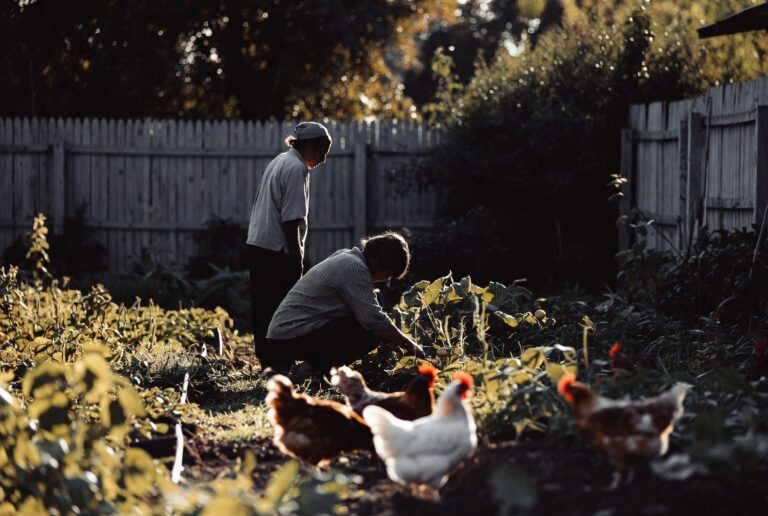
As a gardener, you may actually have an advantage over a large-scale farmer. You’re on foot, watching closely, and tasting, smelling, and noticing small changes. Farmers sit high on a tractor and are insulated by machinery and distance.
So, start having a conversation with your garden. Don’t think you need more control; you just need more attention. Because as Mark Fulford explains, the language of the land has been ignored for too long. But if you start listening and interpreting, you’ll build a new relationship with the land that nourishes you.