When farmland becomes server space, one family draws the line
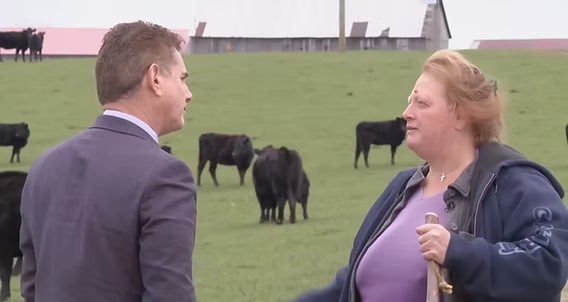
A Kentucky farming family has rejected a $26 million offer from a company seeking to build a large-scale data center on their land, choosing instead to continue operating a 1,200-acre farm that has been in their family for generations.
The decision reflects more than sentiment. As demand for AI infrastructure grows, companies are increasingly targeting large tracts of rural land for energy- and water-intensive data centers — often in areas traditionally used for agriculture. In this case, the proposed development would have transformed productive farmland into part of a 2,000-acre “hyper” facility, part of the expanding physical footprint behind the digital economy.
For Delsia Bare, the choice was clear. Land that has supported food production for over a century — in some cases since the Civil War — was not something they were willing to convert, regardless of the price. Their decision underscores a broader tension now emerging across rural America: whether land will continue to feed people, or increasingly be repurposed to power the systems replacing traditional economic structures.