Bailouts won’t fix a system that’s bleeding farmers dry
In October, a government press release from US Secretary of Agriculture Brooke L. Rollins, Secretary of the Interior Doug Burgum, Secretary of Health and Human Services Robert F. Kennedy, Jr., and Small Business Administrator Kelly Loeffler announced “a suite of actions to strengthen the American beef industry, reinforcing and prioritizing the American rancher’s critical role in the national security of the United States.”
CBS News framed it as help: more than $3 billion in aid for farmers as the government shutdown dragged on. But when John Hansen, president of the Nebraska Farmers’ Union, was asked what that money would actually mean on the ground, his answer was blunt.
It isn’t new relief. It’s routine USDA commodity support — money farmers were already counting on — and it’s nowhere near enough to cover what they’re losing each month.
Right now, Hansen said, corn and soybean producers are operating below the cost of production. Soybeans are nearly a dollar a bushel underwater. Corn producers are losing close to two dollars. For many farms, that translates into $150 an acre in losses, year after year.
“There’s a limit to how many times you can raid your equity in order to be able to supplement your sagging cash flow before your spouse or your banker, or both, say, you know, ‘We’re just losing money. We’re losing equity. Something has to change, right?’”
— John Hansen, President, Nebraska Farmers’ Union
Farmers have been bleeding cash for multiple years, restructuring loans again and again, burning through equity to stay afloat. As Hansen described, many are finally saying the quiet part out loud: we’re losing money, and something has to change.
The question is what.
One of the most glaring answers is meat processing.
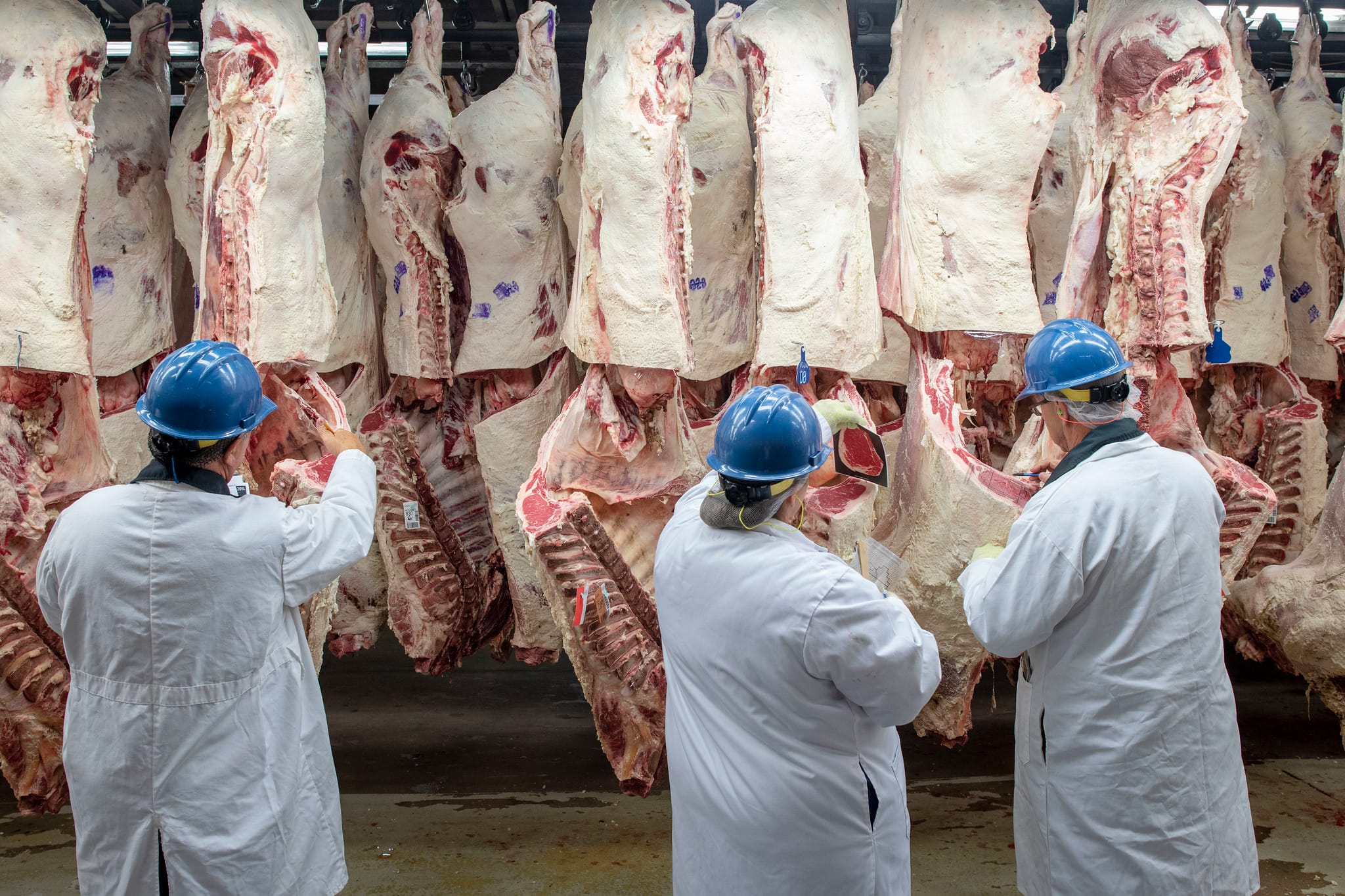
For more than a decade, the U.S. has had a slaughter and processing bottleneck that quietly cripples farmers and ranchers. Under current rules, only meat processed in USDA-inspected facilities can be sold across state lines. There aren’t enough plants. There aren’t enough inspectors. And instead of fixing that imbalance, federal policy has made it worse.
Hundreds of millions of taxpayer dollars have gone into expanding massive industrial meatpacking facilities, or building new ones, while USDA regulations have driven over a thousand small processors out of business. The result is a highly centralized system where farmers often can’t get animals processed locally, even when there’s demand for local meat.
Astonishingly, only one of the new federally funded facilities is east of the Mississippi, where most Americans actually live. So for the majority of consumers and the farmers who serve them the bottleneck remains untouched.
There is a faster, simpler solution.
States already have “custom” processing facilities that can slaughter and process animals — but only for personal use. If USDA allowed states to inspect these facilities using their own inspectors, farmers could sell that meat locally and regionally almost immediately. This was done in Maine during the first year of the pandemic, and it worked. Meat shortages eased. Farmers got product to market. Consumers got food.
Farmers don’t need endless emergency checks to survive a broken system. They need fewer choke points, fewer bottlenecks, and fewer rules that protect consolidation at the expense of resilience.
And until policymakers confront that distinction, we’ll keep watching the same story on the evening news — farmers underwater, relief announced, and nothing fundamentally changed.