Section 453 was quietly removed — and that should worry everyone watching pesticide accountability
A bill was presented to the full House for a vote this week, and a section that made updating pesticide labels a more difficult process has been removed.
https://rules.house.gov/sites/evo-subsites/rules.house.gov/files/documents/cds92500.PDF
At first glance this looks like a win, but the way Section 453 disappeared — and why — tells a more troubling story.
What happened to Section 453?
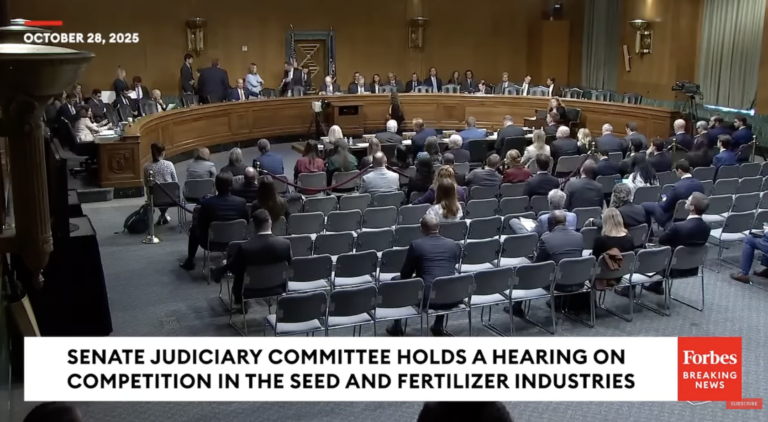
During late-July markup of the House Interior–Environment Appropriations bill, Section 453 was advanced through the full Appropriations Committee by voice vote only. No roll call was requested — despite what appeared to be roughly equal support and opposition in the room.
That matters, because a voice vote avoids putting names on the record. No fingerprints. No accountability.
To observers, it suggested that both parties quietly agreed to avoid forcing members to publicly own a politically toxic vote — one that would be widely understood as protecting Monsanto–Bayer from liability tied to glyphosate-based herbicides.
In short: the bill moved forward, but no one wanted to be seen touching it.
Why remove it now?
Several clues point to strategic retreat, not reversal:
1. Members knew the vote carried a political cost
Republican members and staffers told constituents the provision had nothing to do with liability protection — instead framing it as “harmonizing labels across states.” That framing itself suggests awareness that a straight pro-Monsanto-Bayer vote would be unpopular.
2. The can is being kicked to another bill
House Agriculture Committee Chair Glenn Thompson has already signaled that similar liability-shield language may reappear in the forthcoming Farm Bill. Removing Section 453 now avoids a visible fight while keeping the option alive.
3. The Supreme Court may do the work for them
There is strong reason to believe Monsanto-Bayer expects a favorable ruling in Monsanto v. Durnell. If that happens, Congressional action becomes unnecessary — a Court decision would override state-level efforts and render federal maneuvering largely moot.
From that perspective, Section 453 was expendable.
Why glyphosate safety claims remain deeply flawed
One critical point continues to be ignored in regulatory debates: Glyphosate has been evaluated as a single chemical, even though it is sold and used in complex formulations containing multiple additional compounds. Importantly, those formulations have never been properly evaluated for safety.
This is not a technicality — it’s a foundational failure. Farmers, applicators, and communities are exposed to mixtures, not isolated molecules. Any claim that glyphosate-based products are “proven safe” rests on incomplete science.
Compounding this, a substantial body of research indicates that glyphosate itself may pose serious health risks. That literature exists, and it deserves far more public attention.
Concerning signals from the Durnell case
Another red flag: the attorney representing the plaintiff in Monsanto v. Durnell has shown little interest in challenging apparent misrepresentations in the Solicitor General’s brief.
No corrective filings.
No amicus briefs.
No visible effort to broaden the defense.
Whether this reflects resource constraints, strategic choices, or outside pressure is unclear — but it makes public scrutiny even more important.
What citizens should do now
This is not the moment to disengage, but rather we need to pay closer attention.
- Talk about glyphosate formulations, not just glyphosate.
- Share credible research on health impacts.
- Watch the Supreme Court case closely.
- Question why accountability keeps getting deferred.
- Use social media to keep this issue visible — and uncomfortable.
Silence and procedural obscurity are powerful tools. Public attention is one of the few things that reliably disrupts them.
SOFAF will continue monitoring this issue closely — and encouraging citizens to do the same.
Read more: https://merylnass.substack.com/p/the-pesticide-liability-shield-rider