“We are price takers, not price makers”: farmers testify under oath
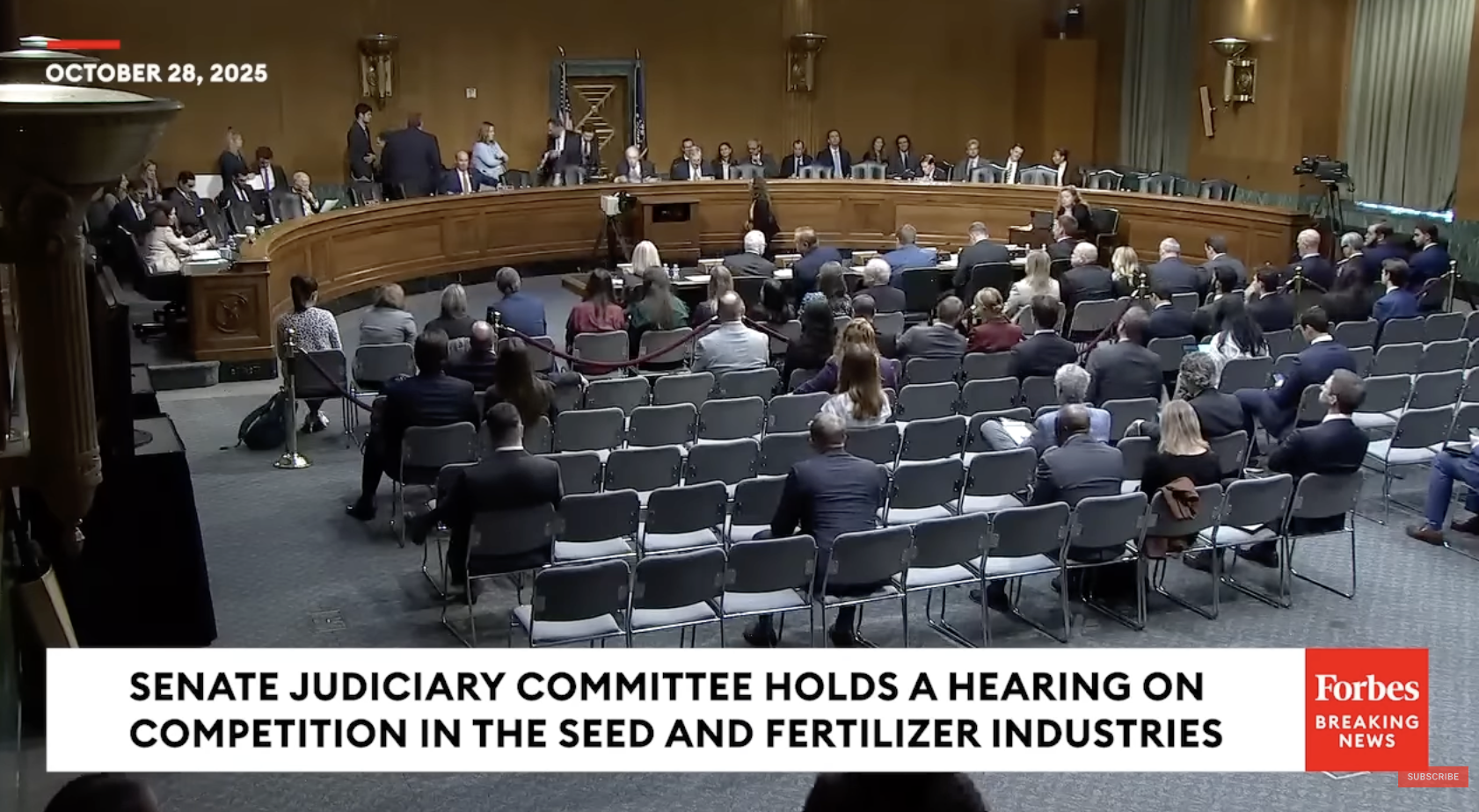
For years, American farmers have been telling the same story in private — about power consolidated in very few hands. In October, they told the story publicly, under oath, before the Senate Judiciary Committee.
You can watch the entire hearing below or read on for a summary and clips of some of the key points.
Farmers testified that they no longer operate in a market where price discovery exists in any meaningful sense. They don’t negotiate or shop around, but simply absorb costs set elsewhere and hope the math still works by the time harvest rolls around — if the weather holds, if interest rates don’t jump again, and if a contract doesn’t change midstream.
As Senator Chuck Grassley put it at the opening of the hearing, farmers “don’t feel like they have a real choice, let alone a fair price.”
Over the last several decades, American agriculture has quietly consolidated into tightly integrated systems. The same companies that sell seed now sell the chemicals that must be used with that seed, the digital tools that dictate planting decisions, and the data platforms that record every action a farmer takes, data the farmer often doesn’t own or control.
Utah Senator Mike Lee laid out the facts about corporate consolidation in stark terms.
When farmers try to switch suppliers, they discover how little flexibility remains. Contracts are written to reward loyalty and punish deviation. Rebates disappear. Prices jump. Access tightens. Even older technologies that should be cheaper after patents expire are often more expensive than ever.
One farmer described it simply: we are price takers, not price makers.
Fifth- and ninth-generation farmers testified that they are struggling to break even, not because they’re inefficient, but because the terms of participation have become one-sided. Several witnesses warned that this isn’t just an economic problem. It’s a resilience problem.
At one point, New Jersey Senator Cory Booker called what’s happening an “extinction-level event” for family farms. Seed prices have climbed steadily. Fertilizer, fuel, machinery, and interest costs have surged. Meanwhile, crop prices have fallen sharply from recent highs. The gap between what farmers pay and what they’re paid keeps widening, and no amount of productivity can close it.
What farmers repeatedly emphasized is that they are not asking for bailouts or handouts. They don’t want to live on subsidies. They want markets that function, where effort, stewardship, and innovation are rewarded instead of penalized.